
PCR performance is often discussed in terms of primer design, annealing temperature and polymerase selection. However, the concentration, balance, purity and handling of dNTPs in PCR can also influence amplification yield, specificity, fidelity and consistency.
The four standard deoxynucleotide triphosphates—dATP, dCTP, dGTP and dTTP—provide the building blocks required to synthesize new DNA strands. They also interact with magnesium ions, which are essential cofactors for DNA polymerases.
Consequently, changing the concentration of dNTPs may alter the chemical balance of the entire PCR reaction. Understanding this relationship can help researchers prevent low yields, nonspecific amplification and avoidable variation between experiments.
This guide explains the function of dNTPs, why 200 µM of each nucleotide is a common starting point, how dNTPs interact with Mg²⁺ and which handling practices support reproducible PCR performance.
What Are dNTPs and What Is Their Role in PCR?
Each dNTP consists of a nitrogenous base, a deoxyribose sugar and three phosphate groups. The four standard DNA nucleotides are deoxyadenosine triphosphate, deoxycytidine triphosphate, deoxyguanosine triphosphate and deoxythymidine triphosphate.
During the extension stage of PCR, DNA polymerase reads the template strand and selects the complementary nucleotide. dATP pairs with thymine, dTTP pairs with adenine, dCTP pairs with guanine and dGTP pairs with cytosine.
The enzyme adds each incoming dNTP to the 3′ end of the growing DNA strand. A phosphodiester bond forms between the 3′ hydroxyl group of the primer or newly synthesized DNA and the phosphate group of the incoming nucleotide.
At the same time, pyrophosphate is released. Because DNA polymerase adds nucleotides only to the 3′ end, synthesis proceeds in the 5′-to-3′ direction.
This process occurs repeatedly during every extension step. The reaction must therefore contain sufficient quantities of all four nucleotides throughout amplification.
If one nucleotide becomes limiting, DNA synthesis may slow or stop when the polymerase reaches a position requiring that base. Maintaining an equimolar mixture helps prevent this type of imbalance.
dNTP concentration errors, degradation, contamination or poor reagent handling may introduce variation even when the primers, template and cycling conditions remain unchanged. Reliable nucleotide stocks are therefore an important part of a reproducible PCR workflow.
What Is the Optimal dNTP Concentration in PCR?
A final concentration of approximately 200 µM of each dNTP is a widely used starting condition for conventional PCR. This corresponds to a total dNTP concentration of 0.8 mM.
Nevertheless, 200 µM of each nucleotide should not be treated as a universal optimum. The most suitable concentration depends on the DNA polymerase, buffer formulation, magnesium concentration, template characteristics, amplicon length and desired balance between yield and fidelity.
At an appropriate concentration, dNTPs provide sufficient substrate for efficient DNA synthesis without unnecessarily disturbing the chemistry of the reaction.
When the concentration is too low, PCR yield may decrease because the polymerase lacks sufficient substrate to complete all extension events. This can be particularly relevant when amplifying long targets or producing large quantities of DNA.
A severe shortage of one or more nucleotides may also contribute to incomplete extension products.
However, increasing the dNTP concentration does not automatically improve amplification. Excessive dNTP levels may inhibit the reaction, alter the amount of free magnesium and affect polymerase fidelity.
Higher dNTP concentrations can also require additional optimization of MgCl₂. If magnesium is not adjusted appropriately, the polymerase may receive insufficient free Mg²⁺ despite the total magnesium concentration remaining unchanged.
For this reason, dNTP concentration should not be modified as an isolated parameter. A PCR reaction that performs well at 200 µM of each nucleotide may behave differently after a substantial increase or decrease.
When adapting a protocol, researchers should begin with the polymerase manufacturer’s recommended conditions. Changes should then be introduced systematically, ideally modifying one parameter at a time.
Why Should the Four dNTPs Be Equimolar?
In standard PCR, dATP, dCTP, dGTP and dTTP are normally supplied at equal concentrations. An equimolar formulation provides consistent access to each substrate and prevents one nucleotide from becoming an artificial limitation.
Equimolar does not mean that the final PCR product contains the four bases in equal proportions. The DNA template determines which nucleotide the polymerase incorporates at each position.
Instead, an equimolar mixture means that the starting reaction contains the same nominal concentration of all four nucleotide substrates.
An imbalanced nucleotide pool may affect amplification yield and fidelity. If one nucleotide is present at a much lower concentration, the polymerase may struggle to continue efficient DNA synthesis when that base is required.
Likewise, a large excess of one nucleotide can disrupt the intended reaction balance and influence magnesium availability.
Preparing individual dNTP solutions manually also increases the number of pipetting steps. Every additional manipulation creates another opportunity for volume errors, concentration differences or contamination.
A ready-to-use equimolar dNTP mix reduces this variability. It also simplifies master mix preparation and improves consistency across multiple reactions.
There are, however, valid exceptions. Some specialized workflows intentionally replace part or all of the dTTP with dUTP. Other applications may use modified nucleotides or non-equimolar ratios.
These conditions should be treated as application-specific formulations. Researchers should confirm that the selected polymerase can incorporate the modified nucleotide and validate the complete reaction accordingly.
The Relationship Between dNTPs and Magnesium in PCR
Magnesium is an essential cofactor for DNA polymerase activity. Mg²⁺ supports the catalytic reaction that forms phosphodiester bonds and also influences primer-template interactions.
The important point is that the total magnesium added to the PCR tube is not necessarily equal to the free magnesium available to the enzyme.
dNTPs naturally form complexes with Mg²⁺. Template DNA, primers and chelating agents carried over from the sample can also bind magnesium.
As a result, increasing the dNTP concentration may reduce the amount of free Mg²⁺ available to the polymerase.
When magnesium is too low, amplification may be weak or completely absent. The polymerase may not function efficiently, even when the concentrations of primers, template and dNTPs appear adequate.
When magnesium is too high, primer-template duplexes may become excessively stabilized. This can encourage nonspecific amplification, increase background products and reduce reaction fidelity.
A useful practical principle is therefore:
When the dNTP concentration changes significantly, the MgCl₂ concentration should be reoptimized.
This does not mean that MgCl₂ must always be increased according to a fixed proportional formula. The optimal magnesium concentration depends on the polymerase, buffer system, template, primers and other reaction components.
For some Taq-based PCR systems, magnesium concentrations around 1.5–2.0 mM may provide a suitable starting range. However, other polymerases and proprietary buffers may require different conditions.
The manufacturer’s recommended formulation should always take precedence over a general rule.
When optimization is necessary, a controlled Mg²⁺ titration is more reliable than applying an automatic correction. Testing a small range of magnesium concentrations makes it possible to identify the best balance between yield, specificity and fidelity.
How to Handle and Store dNTPs Correctly
Good dNTP handling is relatively simple, but consistent laboratory practices can reduce avoidable variation.
Before use, allow the dNTP solution to thaw completely. Keep it chilled during preparation when required by the protocol and mix it gently to restore a homogeneous concentration.
Avoid vigorous agitation unless the product instructions specifically recommend it. Gentle mixing is generally sufficient for nucleotide solutions.
Repeated freeze-thaw cycles should be minimized. Although dNTPs are relatively stable under appropriate storage conditions, repeated handling can increase the risk of contamination, concentration changes and gradual loss of performance.
For long-term or frequent use, prepare working aliquots according to the laboratory’s normal consumption.
Small working aliquots allow researchers to keep the main stock frozen and limit the number of times each tube is thawed.
However, aliquots should not be so small that substantial volumes remain trapped in the tube or are lost during pipetting. The ideal volume depends on the number of reactions normally prepared in each working session.
Clearly label every aliquot with the reagent identity, concentration and relevant preparation or opening date.
Use clean, nuclease-free tubes and pipette tips. When setting up several reactions, add dNTPs to a master mix instead of pipetting them independently into each tube.
A master mix reduces pipetting variability and helps ensure that every reaction receives the same nucleotide concentration.
If a PCR begins to perform poorly, do not automatically assume that the dNTPs have degraded. Primer design, template quality, inhibitors, cycling parameters, polymerase activity and magnesium concentration can produce similar symptoms.
Compare the working tube with a fresh or qualified aliquot before concluding that the nucleotide stock is responsible.
dNTP Mix or Individual dNTPs: Which Format Is Better?
A premixed equimolar dNTP solution is normally the most convenient option for routine PCR, qPCR, RT-PCR and cDNA synthesis.
The main advantage is consistency. The four nucleotides are already present at the same concentration, reducing the risk of formulation and pipetting errors.
A premixed solution also shortens preparation time. Instead of adding four separate nucleotide stocks, researchers can add a single defined volume to the reaction master mix.
This approach is particularly useful for high-throughput workflows or laboratories that run the same PCR protocol repeatedly.
Individual dNTP solutions provide greater flexibility. A set containing separate dATP, dCTP, dGTP and dTTP vials is useful when a protocol requires customized ratios or nucleotide substitutions.
Individual nucleotides may also be appropriate during assay development, when researchers want to study the effect of different formulations.
The selected stock concentration should match the workflow. A 10 mM-each dNTP mix is convenient for routine PCR calculations and allows accurate pipetting in common reaction volumes.
More concentrated solutions can reduce the volume added to specialized formulations, while lower-concentration mixes may improve pipetting accuracy when larger addition volumes are preferred.
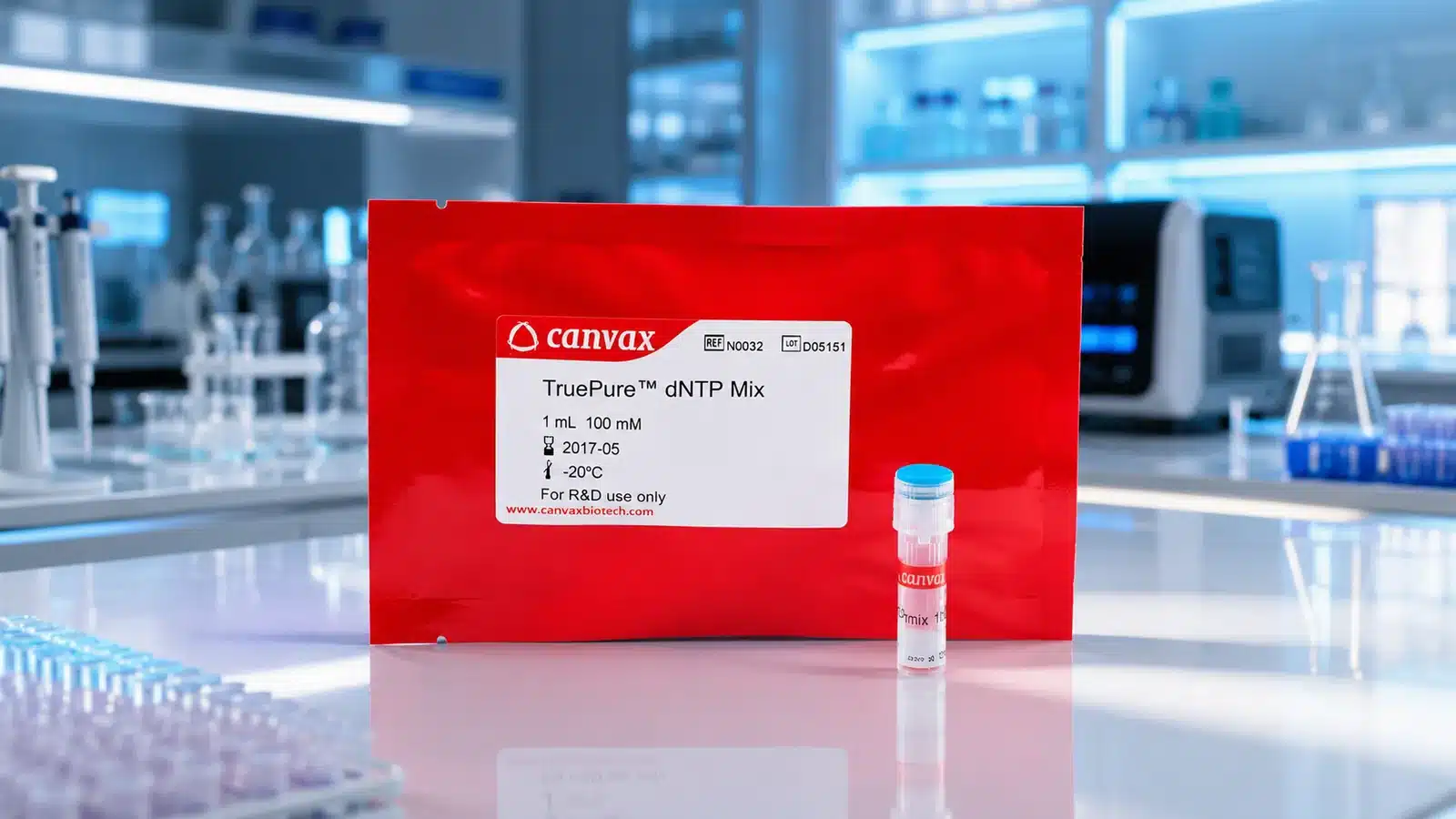
Canvax™ offers TruePure™ dNTP Mix, 10 mM each nucleotide, an equimolar, ready-to-use formulation designed for molecular biology workflows.
For applications requiring customized formulations, the TruePure™ dNTP Set, 100 mM provides dATP, dCTP, dGTP and dTTP in separate vials.
Researchers can also explore the complete Canvax™ nucleotide range to select the concentration and format that best match their workflow.
Troubleshooting Common dNTP-Related PCR Problems
No PCR Product or Very Low Yield
Low yield can result from insufficient dNTP concentration, but it may also appear when the dNTP concentration is too high and the amount of free Mg²⁺ becomes insufficient.
First, confirm the concentration of the stock and the final concentration in the PCR. Check all dilution calculations carefully.
Next, review the polymerase manufacturer’s recommendations and verify the MgCl₂ concentration. If the dNTP concentration has recently changed, magnesium may need to be reoptimized.
Template quality, inhibitors, primer design and cycling conditions should also be assessed before attributing the problem exclusively to the nucleotides.
Variable Results Between Reactions
Inconsistent amplification may result from incomplete thawing, insufficient mixing or differences in pipetting.
Allow the dNTP solution to thaw completely and mix gently before preparing the reaction.
Use a master mix whenever possible. Adding dNTPs independently to each tube increases the impact of small pipetting differences.
Working aliquots can also improve consistency by reducing repeated handling of the main stock.
Nonspecific Bands or Background Amplification
Nonspecific products can be associated with excessive free Mg²⁺, inappropriate annealing conditions or overly high concentrations of certain reaction components.
If both dNTP and MgCl₂ concentrations have been increased, return to the recommended starting conditions and optimize them systematically.
Do not focus exclusively on dNTPs. Primer design, annealing temperature and polymerase selection can also have a major impact on specificity.
Reduced Fidelity
Excessive or imbalanced dNTP concentrations can affect polymerase fidelity.
Confirm that the four nucleotides are present at equal concentrations unless the protocol deliberately requires a different formulation.
If fidelity is critical, use the concentration range recommended for the selected high-fidelity polymerase. Avoid assuming that conditions optimized for Taq DNA polymerase will apply to every enzyme.
Performance Declines After Repeated Use
If a working tube begins to produce weaker or less consistent results, compare it with a fresh aliquot.
Repeated freeze-thaw cycles, contamination or handling-related concentration changes may contribute to reduced performance.
However, the comparison should be performed under identical reaction conditions. This helps distinguish a stock-related issue from changes in the template, enzyme or thermal cycling program.
Confusion About Stock Concentration
A label stating 10 mM each means that the solution contains 10 mM dATP, 10 mM dCTP, 10 mM dGTP and 10 mM dTTP.
It does not mean that the solution contains 10 mM total nucleotides.
This distinction is important when calculating the volume needed to reach 200 µM of each nucleotide in the final PCR.
Frequently Asked Questions About dNTPs in PCR
What Is the Function of dNTPs in PCR?
dNTPs are the substrates that DNA polymerase uses to synthesize new DNA strands. The enzyme incorporates dATP, dCTP, dGTP or dTTP according to the sequence of the template.
What Concentration of dNTPs Is Normally Used in PCR?
A common starting point for conventional PCR is 200 µM of each dNTP. However, the optimal concentration depends on the polymerase, buffer, target length and specific assay requirements.
Why Must dNTPs Be Equimolar?
Equal starting concentrations prevent one nucleotide from becoming an unintended limiting substrate. Equimolar formulations also simplify reaction preparation and support consistency between experiments.
How Do dNTPs Affect MgCl₂ Concentration?
dNTPs bind Mg²⁺ and reduce the fraction available to DNA polymerase. A substantial change in dNTP concentration may therefore require magnesium reoptimization.
Should dNTPs Be Thawed on Ice?
Follow the instructions provided for the specific reagent. For routine laboratory practice, dNTPs can be thawed on ice, mixed gently and kept chilled during reaction preparation when required by the protocol.
How Can Freeze-Thaw Cycles Be Reduced?
Prepare working aliquots based on normal laboratory consumption. Keep the main stock frozen and return working tubes to the recommended storage conditions promptly after use.
Is a dNTP Mix Better Than Individual Nucleotides?
A dNTP mix is generally more convenient and consistent for standard PCR. Individual nucleotides are preferable when the experiment requires custom concentrations, modified ratios or substitutions.
Choosing Reliable dNTPs for Reproducible PCR
dNTPs occupy only a small volume in a PCR tube, but they affect several critical aspects of the reaction.
They provide the substrates for DNA synthesis, interact with magnesium and contribute to the balance between yield, specificity and fidelity.
Researchers should begin with the dNTP and Mg²⁺ conditions recommended for the selected polymerase.
The four standard nucleotides should remain equimolar unless the application requires a deliberately modified formulation.
Correct handling is equally important. Allow dNTP solutions to thaw completely, mix gently, avoid unnecessary freeze-thaw cycles and prepare appropriately sized working aliquots.
When PCR performance changes, evaluate the complete reaction rather than focusing on one component.
Increasing dNTP concentration does not automatically increase yield, and adding excessive MgCl₂ can encourage nonspecific amplification.
Reliable PCR depends on maintaining an appropriate balance between nucleotide concentration, magnesium availability, polymerase activity and reaction conditions.
Explore TruePure™ Nucleotides from Canvax™ to select ready-to-use dNTP mixes or individual high-purity nucleotides for PCR, qPCR, RT-PCR, cDNA synthesis and other molecular biology workflows.